
How one couple’s first foster experience became a story of connection, empathy, and lasting relationships.
When Sarah and Mario opened their home to children in foster care for the first time, they weren’t sure what to expect. What they discovered was not only the joy and heartbreak that often come with fostering, but also the deep, transformative power of showing up — not just for the children in their care, but for their parents, too.
“We’ve only had one long-term placement so far,” Sarah shared, “and we’ve started doing respite care recently — so we’re still pretty new to all of this.”
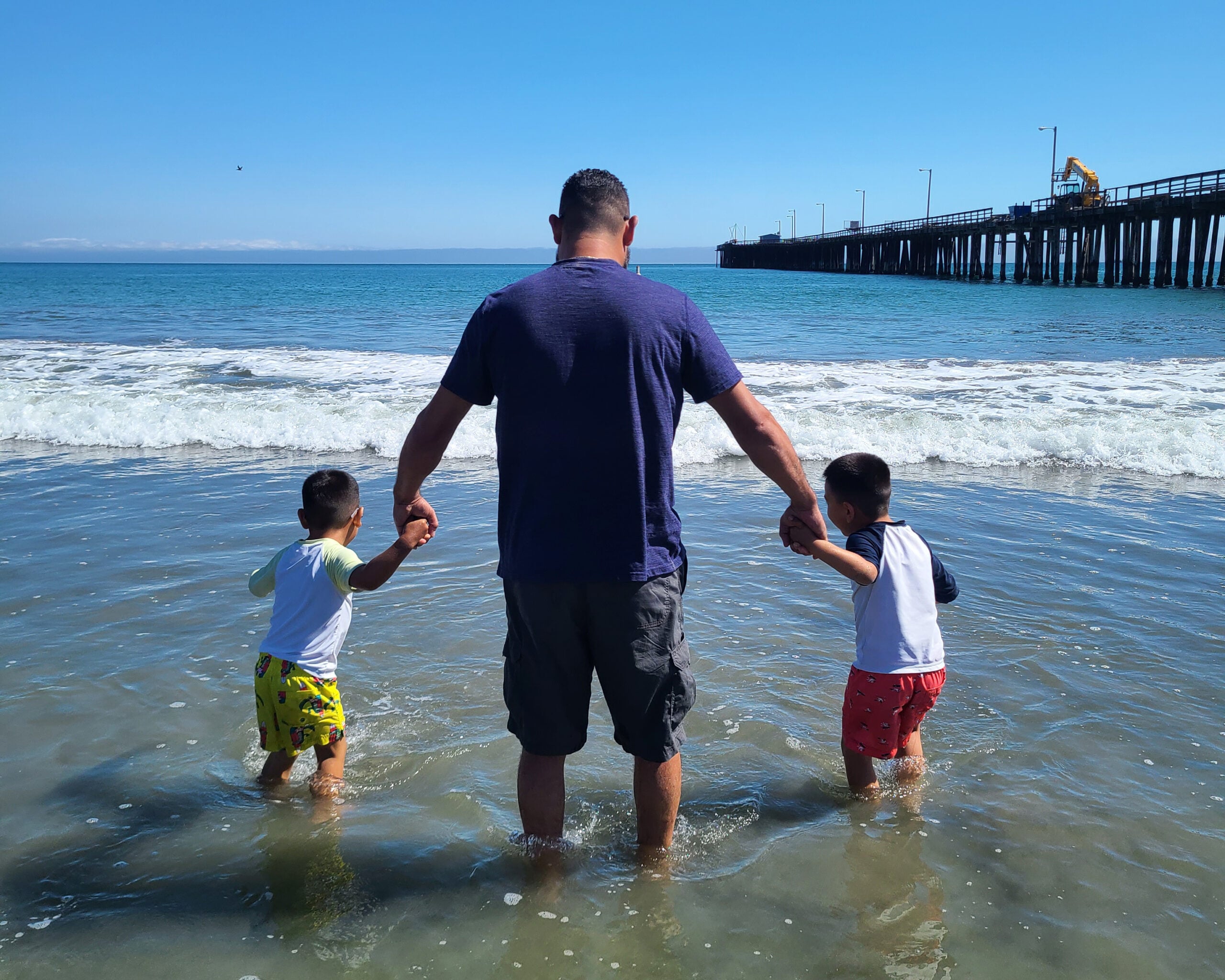
Their first placement was a sibling set of two boys, ages four and five, who stayed with them for eight months. During that time, the boys celebrated birthdays just three days apart, turning five and six surrounded by love and laughter. Sarah and Mario made sure their brothers — placed in another home — remained part of their lives through visits, family gatherings, and shared celebrations.
“It was important to us that they didn’t lose that bond,” Sarah said. “We wanted to keep the brothers connected, no matter what.”
Building Bridges, Not Barriers
From the start, Sarah and Mario noticed something unsettling during visits with the boys’ biological family: silence.
“No one really spoke to each other,” Sarah remembered. “The other foster parents didn’t talk to us, and the bio family just stayed in their corner. It all felt so disconnected.”
Refusing to accept that distance, the couple made a simple but powerful choice — they introduced themselves. “We wanted to be intentional about building relationships,” Sarah said.
Before the boys’ first visit, Sarah called their bio parents directly. She introduced herself, asked about routines that mattered to their children, and reassured them that she and Mario viewed the boys as the bio parent’s children first.
“We acknowledged how much they loved their boys and how hard the situation must be,” Sarah explained. “We just wanted them to know they were seen and that their children were safe.”
Those efforts built trust. Sarah brought printed photos of the boys to every visit, responded to messages from bio mom, and kept communication open.
Reunification and Beyond
Eight months later, the family’s case headed to court. “Even that morning, no one knew how it was going to go,” Sarah recalled. “But before the hearing, we agreed that no matter what happened, we were all there to support the boys.”
When the judge ruled for reunification, Sarah and Mario embraced the boys’ bio parents through tears.
“We told them congratulations — their boys were going home.”

A few weeks later, when one of the boys was scheduled for surgery, his mother — then very pregnant — reached out again. She asked if he could stay with Sarah and Mario for a week to recover.
“Of course, we said yes,” Sarah said. “It was really special to have that time with him again. Mom checked in often, and both parents were so appreciative.”
Even months after reunification, Sarah continued to offer rides to appointments and encouragement through texts and phone calls. They had told their caseworker they wouldn’t take any new placements for six months — wanting to stay available to support the family’s transition home.
The Hard Parts — and the Heart Behind It
Like many foster parents, Sarah and Mario experienced their share of frustrations — especially with communication and support from the system.
“Even the boys’ mom didn’t know she was getting them back that day,” Sarah said. “They weren’t prepared, emotionally or practically. That added a whole other layer of complexity.”
Mario agreed.
“There are programs and services for foster parents and for post-adoption, but not for the biological families who just got their kids back. That’s when they need the most help. We expect them to hold everything together with almost no resources — that has to change.”
Still, despite the challenges, they’ve chosen to stay connected — not because it’s easy, but because it matters.
“We may not be able to fix everything,” Sarah said, “but we can show up in small ways that matter. We can call and say, ‘How are you doing today?’ or remind her, ‘You’re doing a good job.’ Those little things make a difference.”
Growing Through Love and Loss
For Sarah, fostering was a dream years in the making. “I’ve always known I wanted to foster,” she said. “When we got married, I told Mario, ‘Just so you know, this is going to happen at some point.’”
Mario admitted that at first, he wasn’t sure. “I’m someone who gets really attached,” he said. “When the kids leave, it hits me hard. But this experience opened my eyes. Seeing what these kids and families go through — it changes you. Now, I don’t want to say no if we’re in a position to help.”
Looking Ahead
Today, Sarah and Mario continue to provide respite care and stay in touch with the family who changed their lives. They’re also thinking about the future — possibly welcoming another group of siblings or working toward a permanent placement.
“Ultimately, I’d love for us to have a permanent placement that leads to adoption,” Sarah said. “But more than that, I hope we can keep supporting families even after reunification. Just because the kids leave our care doesn’t mean the love or connection disappears.”
The couple also hopes to advocate for greater support for families after reunification. “There are so many families in need, and the support they receive is often inconsistent,” Sarah said. “We want to do more to help fill that gap.”
Sarah and Mario’s journey reminds us that fostering isn’t only about providing a home — it’s about building bridges, extending grace, and believing in the power of family healing.
“Foster care can be traumatic,” Sarah reflected, “but it can also be redemptive. When we lead with compassion, everyone — the kids, the parents, and even us — has a chance to heal.”
Kaitlin Earnest, Contributor