
Turning 18 is often celebrated as a milestone—a moment of freedom, independence, and possibility. For many young people, it marks the beginning of adulthood with family close by: a place to return to, someone to call for advice, and a safety net when things don’t go as planned.
However, for thousands of youth in foster care, turning 18 feels less like a celebration and more like a deadline.
Most young adults continue to rely on family well into their 20s and 30s. They move back home after graduating, need help covering rent, or lean on parents while navigating school, jobs, and health care. This kind of support is common—and often invisible to those who have it. What’s also often overlooked is how much the economic landscape has changed. Rising housing costs, student debt, stagnant wages, and an increasingly competitive job market have pushed traditional “milestones” like financial independence, homeownership, and stability further and further out. Many people came of age under very different economic conditions, and without realizing it, compare today’s young adults to a version of adulthood that no longer exists—one that was simply more attainable at a younger age.
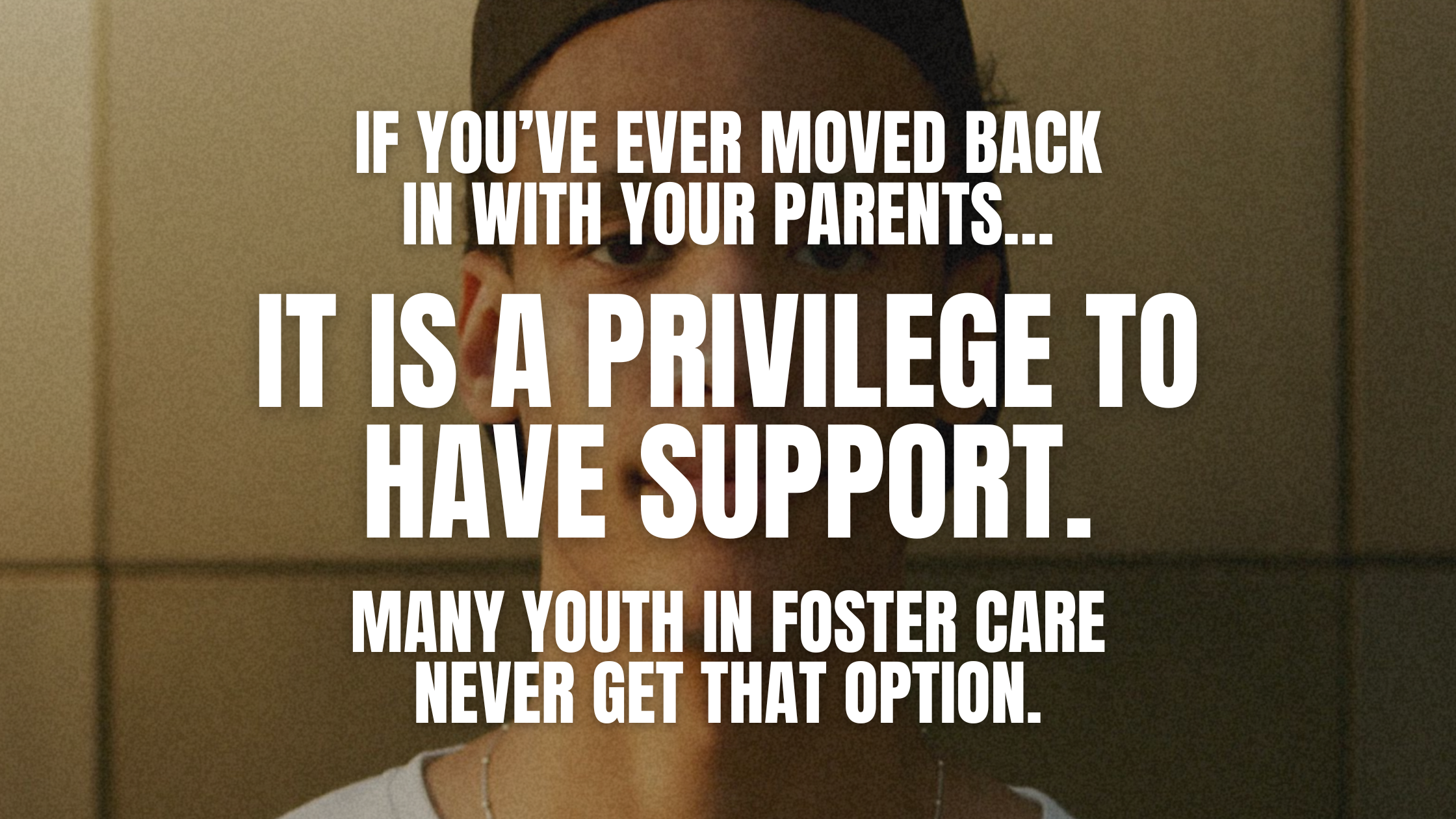
If you’ve ever moved back in with your parents, you had a level of support most youth in foster care never receive.
When foster youth age out of care, that support can disappear overnight. They are suddenly expected to secure housing, maintain employment, manage finances, and cope with trauma—alone. This isn’t about effort or resilience. It’s about being asked to do adulthood without a safety net.
Aging Out and the Risk of Homelessness
The consequences of aging out without support are significant. Without stable housing or ongoing guidance, basic needs like food, employment, and health care can become overwhelming almost immediately.
This is why the connection between foster care and homelessness is so stark.
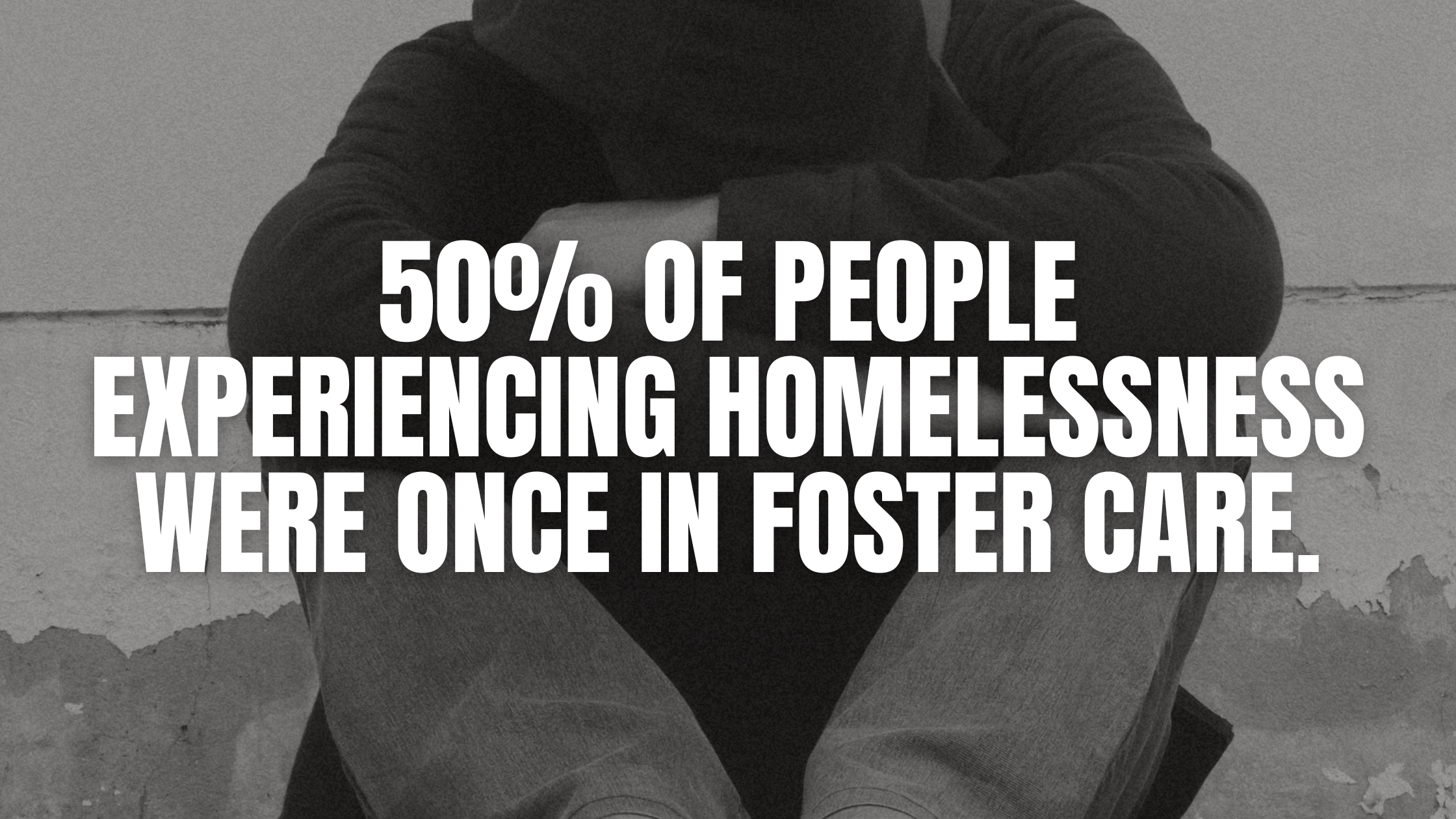
Nearly 50% of people who experience homelessness were once in foster care.
For many young people, homelessness doesn’t begin on the street—it begins the moment care ends. Within months of aging out, some youth are couch surfing, living in their cars, or entering shelters simply because they had nowhere else to go.
These outcomes are not a reflection of a young person’s potential. They are the result of systems that expect independence far too early, despite the fact that most young adults rely on family support well beyond age 18.
Extended Foster Care: A Bridge to Stability
Extended Foster Care (EFC) was created to address this gap.
Rather than forcing an abrupt transition at 18, Extended Foster Care allows eligible youth to remain in—or re-enter—foster care, typically up to age 21. The goal is to provide time, stability, and guidance during a critical developmental period.
Participation in EFC is voluntary. Youth may leave and re-enter the program before age 21 as needed. To remain eligible, youth must meet at least one of the following criteria:
- Completing high school or a GED
- Enrolled in college or vocational education
- Working at least 80 hours per month
- Participating in an employment-readiness program
- Having a documented medical condition that limits participation
What makes Extended Foster Care so impactful is the support that comes with it. Youth may receive:
- Housing and independent living support
- Education and job training assistance
- Health care coverage, including Medicaid
- Life skills training such as budgeting, cooking, and time management
These are the same supports many families provide naturally—offered here intentionally to help young adults succeed.
Research shows that youth who participate in Extended Foster Care have higher college enrollment, increased income, and lower rates of homelessness and food insecurity. Simply put, Extended Foster Care replaces a cliff with a bridge.
Independence is a process—not a deadline.
Why This Matters
Eighteen is too young to be completely on your own.
Most young adults rely on family until age 26 and beyond. Foster youth deserve that same chance—to grow, to make mistakes, and to build a future with support behind them.
When family isn’t built in, community must step in.
Resources for Youth Aging Out of Foster Care
Below is a starting list of California and Nevada resources that support youth transitioning out of foster care.
California
- Extended Foster Care (AB 12)
Allows eligible youth to remain in foster care up to age 21.
Website: cdss.ca.gov → Foster Care → Extended Foster Care - Independent Living Program (ILP)
Life skills training, education and employment support, housing guidance.
Website: cdss.ca.gov → Foster Care → Independent Living Program - Transitional Housing Programs (THP-NMD & THP-Plus)
Supervised housing and supportive services for young adults exiting foster care.
Website: cdss.ca.gov → Foster Care → Transitional Housing - Guardian Scholars / NextUp (College Programs)
Campus-based programs offering academic, financial, and housing support.
Contact: Foster youth liaison at local community colleges or universities - Chafee Educational and Training Vouchers (ETV)
Financial assistance for college or vocational training.
Website: https://www.cdss.ca.gov/inforesources/foster-care/chafee-education-and-training-vouchers-program
Nevada
- Nevada Independent Living Program (ILP)
Independent living skills, education preparation, housing support, mentorship.
Website: https://dcfs.nv.gov/Programs/CWS/IL/ - JIT Nevada
Resource hub connecting youth to independent living services.
Website: https://jitnevada.org/washoe/youth.html - Nevada Youth Empowerment Project
Nevada Youth Empowerment Project gives homeless young women (18-24) in the Reno area a chance to reroute their lives through a structured program that provides housing and basic needs, life skills training, opportunities to practice new life skills, and the support and love of a family.
Website: https://nyep.org/
Additional Support (CA & NV)
- 2-1-1 Helpline
Dial 211 to connect with local housing, food, health care, and crisis resources. - College Foster Youth Liaisons
Many campuses offer housing assistance, counseling, and emergency funds. Website: https://www.csac.ca.gov/foster-youth
Youth aging out of foster care don’t need to be saved—they need to be supported.
Whether through fostering, mentoring, advocating for extended care, or sharing information, everyone has a role to play. Family support shouldn’t be a privilege—it should be a promise.
Because no young person should have to face adulthood alone.
Kaitlin Earnest, Contributor